Showing posts with label Childhood Fear. Show all posts

Friday, May 28, 2010

"Mommy, You're Good at Killing Monsters."

The other day while my mother had taken my older daughter, B – 3 years old– to the park. I was bouncing my baby son and playing video games, like ya' do, and when the pair returned, my daughter exclaimed with unrestrained joy and excitement:

"Mommy, you're good at killing monsters!"

I was startled and laughed out loud because "Yes, I am good at killing monsters.

Now,  let it be known that I am not going to start playing violent video games daily in front of my daughter, she's a little young for that and as she has begun exclaiming, there are even parts of Scooby-Doo that are scary. But! I was both startled and excited that her walking in on me slaughtering hell beasts was not a moment of panic, but a moment of awe at mommy's ability to vanquish the concerning monstrous horde.

As you know, I feel strongly about challenging and yes, frightening your audience. I am a firm believer that if you face a fear and deal with it psychologically in a safe place, like a child dealing with nightmares at home where mommy and daddy can help put it in context, you'll be more prepared to deal with them later on. That said, I'm not sneaking into my kids' room at night and yelling them awake either.
On mother's day B sat through her her first movie (more or less), and this was really quite exciting for me and my husband, it was Where the Wild Things Are, and she asked a lot of really compelling questions. She was very concerned with how everyone in the movie was feeling, why people were being not nice to one another and the obvious concern of many critics, that the movie simply "wasn't the same story as the book." Which it isn't.

 She was much more bothered by the older kids at the beginning of the movie who made Max cry than she was of the Wild Things themselves, as well as the "Mommy who was Mad-ic and yelling" (for some reason "Mad" is "Madic" in B-language: "Don't be Madic, Calm Down!". Though she did find them "scary" the monsters were really only monsterous to her when they were being "not nice".
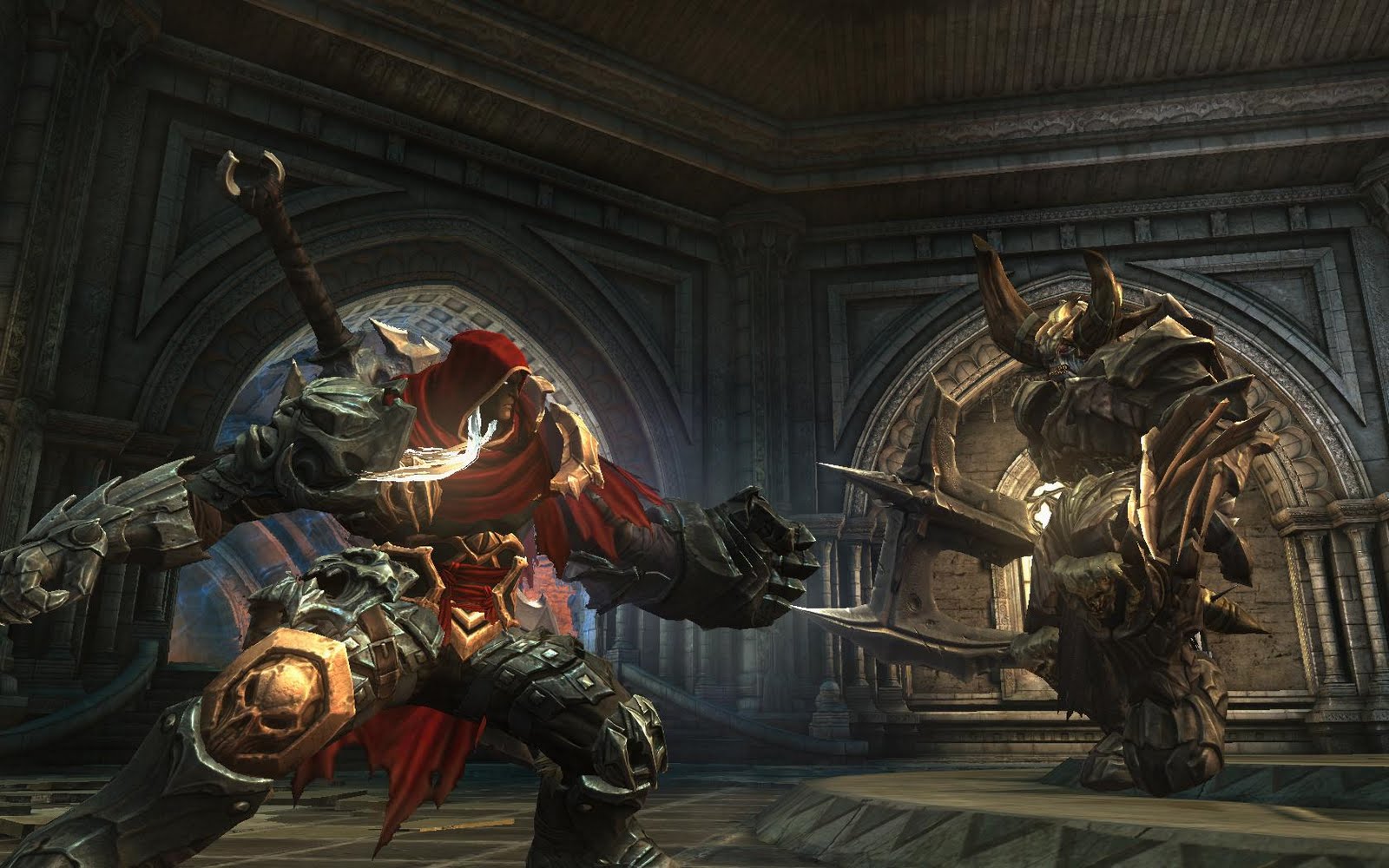
The film, and her concern for these characters, had a much more lasting outward effect than walking in on me fighting off the legions of hell in a lava pit, but, what has stuck from that is asking me if I'm going to "kill monsters". I usually say no, because I want to play puzzles with her, or because I was actually going to watch a DVD with her and had picked up the controller, let's be honest, it's easier to do something with her in the moment than play a game then clean up the paint that got all over the floor because I was in the zone.

Overall, I like that B's first reaction was that Mommy was winning, she got very excited about it and cheered me on for several minutes before I decided to stop playing. I chose to stop because my arms were getting tired (bouncing a sleeping baby and working a controller is a surprisingly solid workout) but I'm glad I didn't immediately jump to shut off the console. If I can be a demon-vanquishing roll model to my baby girl, then I will take that and run with it.

I certainly am concerned about raising B to know that violence doesn't solve most problems, let's be fair, it solves the problems of ravening demons invading your cityscape in a video game. It was fun for me to be cheered on as I eviscerated the scary creatures that unflinchingly menaced my avatar as B yelled where they were coming from next. Afterwards, we all had a hearty cuddle and she was excited, not frightened by the experience.

I don't think I'll be letting her play Dead Space or BioShock any time soon, but maybe it's time we started thinking about a Wii.  I'd like her to feel she has the power to overcome scary characters, something I never got as a munchkin, I didn't play video games and the frighting spectres of childhood entertainment were never creatures I could interact with and vanquish on my own. Maybe if I'd been able to take on Freddie Kruger myself and overcome him in the video game setting, I would have been less plagued by nightmares. Or if I'd had the ability to control Jaws on a rampage I'd have been able to laugh him off a little more, I mean, I was hundreds of miles from the nearest large body of water.
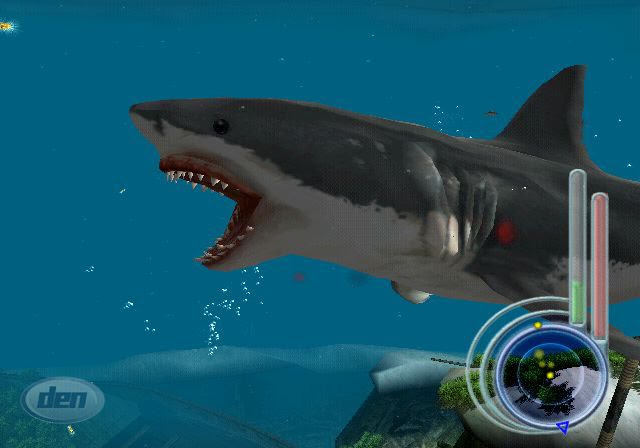
 Waaaay less intimidating than my imagination.

The ability to interact directly with the characters who inhabit your nightmares is a gift, and one to which these new generations of kids have unique access. My three year old probably isn't old enough to meet Master Chief or take on the Locust with Marcus Fenix; but I think she's may be ready to be introduced to Mario.

Thursday, August 13, 2009

Don't be afraid to scare your audience, please.


This article was on Babble a while ago, and I feel the desire to comment on it, in no small part because I haven't ranted about anything for a while. The gist is that in recent years (a trend of over a century) the idea of children being fragile and vulnerable mentally while child mortality is way, way down, has sanitized children's literature.
In the twenty-first century, our sense of children's fragility has, if anything, intensified, with hysteria around everything from peanuts to sexual predators. If we see our children's bodies as fragile, their psyches seem even more so. "Parents have been told for fifty years that they are fucking up their kids," says Dr. Charuvastra. "Fifty years ago, people didn't worry about this." Now, we are obsessed with protecting our kids from emotional harm.

But protecting kids from psychic discomfort may not be good for them. "Is it important for children to experience novel or unusual emotions?" asks Charuvastra. Maybe so: By requesting the same alarming story over and over, a child is mastering his fears about death, punishment and scary animals, all of which are part of real life. Scary books are a kind of play therapy. "The importance of bad things in stories is that they help create pretend space where bad things can happen," says Dr. Charuvastra. "It's better for your child to experience these feelings for the first time with you, in pretend space, than in non-pretend space." Indeed, this ability, observes Charuvastra, "to flip back and forth between pretend and reality, to take a step back and say, this is pretend, in my head," is a skill that many adults never learn, unless we enter cognitive therapy as patients. So a child reading In the Night Kitchen may be developing critical inner resources.

Now, I tend to think if a child doesn't get a chance to encounter scary things in a safe environment, when there's a framework to help them assimilate these feelings, they're being done a disservice. I was a fairly scared kid, I managed to freak myself out pretty effectively without ever seeing horror movies and as I grew up, learned that my imagination had been much worse than the actual content of the books or movies I might reference as too scary for me to watch. It wasn't easy to get through as a phase, but frankly, there are a lot of things now that I'm perfectly willing to do or explore now that I'm not afraid of because I worked through my fear of them as I was trying to fall asleep at 7.
My parents had a different perspective than my friend's parents, simply because they were about 20 years older. One of the most telling and emotional elements of my father's childhood was the mortality of his friends and classmates. He was born in 1942 and for his school career he would consistently lose about one classmate a year to polio or some other disease. By the time my friend's parents were in school, vaccines were in place and life and death didn't happen the same way. That kind of thing was a sort of constant fear that kids lived with 50 years ago, who will be dead when we return from summer vacation? It's just not a concern that kids have today.

Bad things still happen, all the time, and kids are often forced to deal with issues that are difficult for adults. Can we expect adults who have never had a chance to examine peril and fear in a safe environment to not act like children when presented with difficult issues?

While plenty of people still read the classics, and classic children's stories are still easily available one need only look at the progression of folk-tales from Grimm to Disney to see a progression that disregards centuries of storytelling and undermines much of the stories original purpose. There's obviously still conflict in Disney stories, and they do have value in their own way, but they are not the same stories and the lessons are different from the ones they once told.

Even "Old School Sesame Street" with its frank portrayals of people living in poverty and the occasional excesses of it's puppet monsters is no longer "appropriate for the needs of today's preschooler."

If characters aren't presented with real conflict to face, fear to spur their bravery, choices with consequences, responsibilities that actually affect their world, what value is their story to an audience? The Princess and the Goblin would not be as compelling if it were The Princess and the Robin. Scarlett O'Hara would not be as lasting a character if she were facing the deprivations of School Board zoning dispute rather than the American Civil War.

So why is Curious George no longer ashamed of the results of his oft-dangerous, oft-reckless antics? I think there's a real danger inherent to the idea of sanitizing stories, if for no other reason it makes them really, really boring.

Let's give our heroines and heroes a chance to prove themselves against things that can be called really difficult, even if it means a few nightmares for the audience. The terrifying tales of literature have not become less popular because they dealt with vampires who sucked blood, the reanimated corpses of the dead, or vicious and cruel battles fought by those who never started the fight. In a lot of cases, the fact that they made adults a little squeamish is what made them great, lasting and memorable.