Showing posts with label beauty. Show all posts

Wednesday, December 28, 2011

The Hunger Games: Katniss and Aesthetic Perception

One of the most fascinating parts of The Hunger Games to me was that it had one of the most down to Earth explanation of why someone should care about their looks I've encountered in literature. As you may remember from my post on Tinker Bell Wearing Pants, the reason why someone chooses to look a certain way is as important as their natural beauty, and often times, far more important. Also, and this is really key to story, it's much more interesting than someone merely radiating unfathomable golden beauty under a raft of adjectives to know say: they're dressing up so people will buy them weapons so that they can fight for their survival.


Now, what follows has SPOILERS so if you don't want SPOILERS you can stop reading now, pick up the book trilogy and come back later, you've been warned. 

So Katniss, she's a pretty practical girl, darker coloring than her mother and sister and doesn't have their culturally beautiful looks. That said, she's not hideous, she's pretty we all know this, she's the heroine, it true and others do see this even though she doesn't think about it much herself, what with avoiding starvation and supporting her family and all, she's busy and young. This is all hugely relatable and frankly a good place to start.
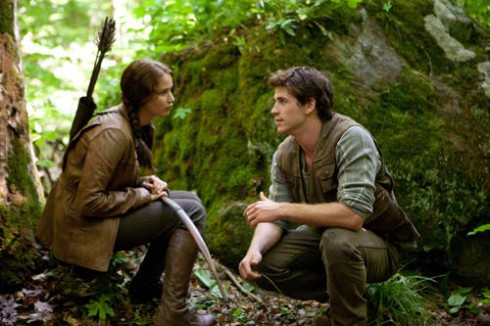
Now you'll say to yourself, "this is such a fantasy character"; and I will reply, "Yes, she is. It's a young adult fiction fantasy novel, that is pretty much the point, accept it and move on.  Her reason for existing on multiple levels, is as an object lesson to others, and the point of a good story is to keep you interested enough to learn.

Now through twists of fate she ends up being taken as a tribute to the Captiol to fight in The Hunger Games, a reality show fight to the death between the 12 Districts of Panem. Now, while Katniss hails from District 12 a gritty Coal Mining area filled with poverty and death, the Capitol, the central district of this authoritarian empire is a place of extremely artificial beauty.

Effie Trinket, host of The Hunger Games
We're first introduced when she meets her stylist, Cinna. A young designer who is a fashion wunderkind in a land that knows its fashion, and has chosen District 12, because it is one of the poorest districts, least well provisioned, not capable of training gladiators for the arena, and that is a crime. Cinna is a man with specific gifts, who sees how he can make the biggest statement he can, and for that, Katniss is his tool. Katniss is a random variable in someone else's aesthetic style, the opening ceremonies of the Hunger Games are like the Opening Ceremonies of the Olympic Games, big costumes and people picks who they're rooting for. And, Spoiler, Cinna literally sets Katniss on fire in order to give her the most memorable image and ensure that someone would want to be her patron and send her food or weapons during the fight.

Sometimes, making a good first impression is a matter of life and death, whether it's a job interview or a national television debut when you need to garner support, consider your presentation accordingly.
Over the course of the next book, Katniss is paraded around and is constantly under public scrutiny. Largely, the style and execution of her physical appearance and activities are out of her hands, are once again: a matter of life and death. Cinna comes and goes, using his expertise in executing the instructions of President Snow and giving savvy advice to Katniss, who he knows has to keep up an act for more than fame and fortune, he knows that if she fails, the stakes are truly dire. Katniss listens to all of this advice, she takes most of it, and most importantly begins to be able to gain mastery over the aspects of beauty as she had archery and trapping. She learns what advice is good and what is bad, and survives the less martial trials with equal savviness.

The Mockingjay Pin she wears becomes her personal symbol
Don't turn down well intentioned advice out of hand, learn from all of it.
As I mentioned, the President was involved here. Katniss inadvertently makes herself a very strong political symbol at the end of the first book. And must act out motivations publicly that are contrary to the underlying reasons that she did the thing that she did that made all that come about (it is worth reading, I'm trying not to give away too much). So she's under scrutiny that is both that of of a Reality Show star, who is essentially the only star around, and a political propaganda figure for multiple factions within Panem and frankly, she's still a kid who just wants to get out of there.

She may be reacting to many factors out of her control, but within that given scenario she is smart, she is clever and she is attentive to the world around her. She knows she must look a certain way to accomplish her goals, and she strives hard to execute that goal aesthetically in a way that compliments her choices.
Finally, the game has changed, the whole world is upside down and --SPOILER-- Katniss is the figurehead of a Revolution. Now, contrary to many ideas of what the "Leader of a Revolution" is, Katniss is once again more or less under the thumb of those who have been planning for this, have more resources, and spin the world around their schemes. At the same time, Katniss

She learns how to wield her fame and image because they are the strongest weapons she has, and learns to use her voice as well as her face to move people and highlight what she knows to be important. When she learns to combine the two, she takes the power from those who would spin her opinion or speak for her, and is able to take agency for both action and perception of her actions.
A worthy message can be undercut by a poorly presented speaker. A superb, interesting facade can be utterly vacant. Aesthetic skills can be learned, and should be learned with applicable motivation behind them. The Hunger Games does a phenomenal job explaining why aesthetic presentation is important, without enforcing a specific ideal of beauty. The real beauty it asks the audience to seek out is that which best presents the self.
Clothes can come on and off, but knowing who you are underneath is the only way to truly present yourself in the most powerful, appealing light.  The reality is that the world is always watching, even in a microcosm, and if you want to get your way, you have to learn how to use the tools at your disposal.

Tuesday, December 27, 2011

Licensing Beauty

If you haven't already read Beauty: The Semantic Rules of this Blog, I recommend it now. 

The business of narrative often overlooks aspects of Beauty in its properties, or doesn't give it enough attention. For example, Twilight, the books and movies, have hugely boosted the sales of pale foundations. The Hunger Games has its own Nail Polish Line, and DC has already started to roll out Wonder Woman and other Comic Book heroine inspired lines with M.A.C.


Here, fictional character Effie Trinket's personal style dictates fashion for both the fictional world of the Hunger Games and likely, the fashion of the film's fans in the real world. Wearers can mix and match from a broad color pallette according to their own style without appearing costume-y. Effie Trinket's over the top style in the Captiol of Panem is considered "Fashion" and not costume.


The commercial advice that is illustrated here is that ultimately, the aesthetic interpretations of beauty vary pretty widely in the real world. Even in distinct fashion circles the pursuits are individual at their heart, and rather than dictating a specific style the creation of compatible options are the strongest way to market beauty products within a franchise.

Beauty: Semantic Rules I Use in This Blog

Beauty is a very strong carrot that is confusingly thrown into a pot of conflicting societal dictates, stirred together, refined into glitter and blasted into the faces of young girls, from age 4 onwards (if not earlier). It's an extremely subjective analysis often portrayed as analytically objective by taste makers and professionals who have their own agendas for owning "style", "fashion" and "the next look". For many, this is fun, chasing a look, attempting a new style, the season's colors. And for many it is an arduous and repulsive chore to iron, diet, pinch, prod and attempt to emulate the forms that some people just naturally look like.


Rather than dive into why all this "Beauty" consciousness and material pursuit is a dangerous or bad thing, for the sake of this article, let's talk about it in these terms.
  • "Beauty" is a goal of aesthetic presentation that is pleasing to the eye of the beholder and those around them. 
  • "Style" is personally identified and executed that represents the aesthetic choices of an individual. 
  • "Fashion" is an externally dictated, aspect of potential style that is agreed upon by mutual consensus of a group. 
  • "Costume" is dressing as something that you are not, in a recognizable (i.e. not subtle) way, to mimic or represent an exaggerated "otherness" 
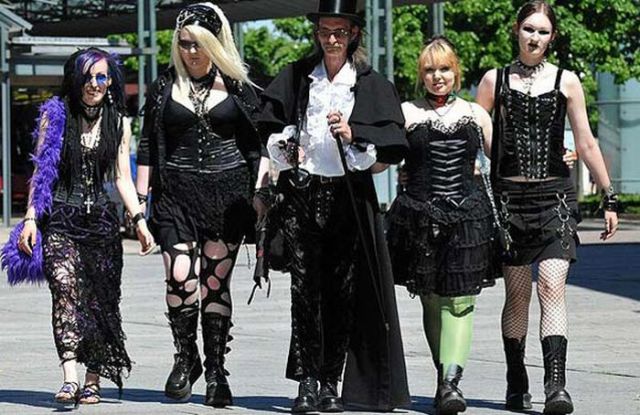
Costume may seem a little off topic, but go with me on this tangent for a moment. Costume is an often childish pursuit that is generally looked down upon in "fashionable" circles, except during specific events, Masquerades, Halloween, Carnival, Themed Parties, Some Fashion Shows (Alexander McQueen and Betsey Johnson rode/ride that line pretty close)...

Costume is about seeking out something that is performative and mythic beyond style and fashion, this is why "National Costume" is powerful: it represents a cultural identity of a group that is easily identifiable and when worn, puts a person in a totally different context, they are part of the long cultural history of their land and are representing it to others.

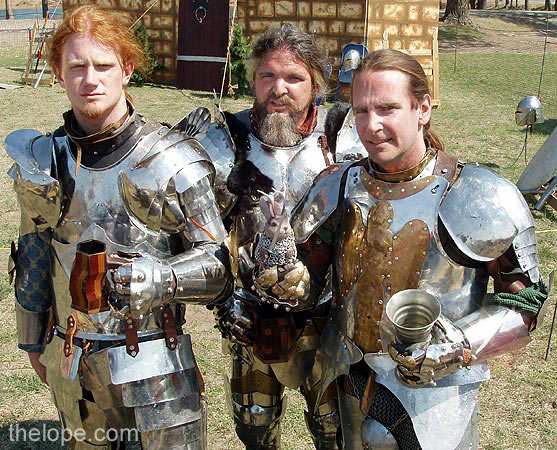
It's also why things like LARPing and Cosplay have such powerful resonance for fans. When you can physically put on an item to become part of a narrative or legend that resonates with you it creates a new type of engagement and sense of one's ownership in that fictional world. It helps one act in accordance with the world's rules, and understand the nuances of how a character feels: literally walking in their shoes.
These shoes are actually quite heavy, and hard to keep shiny.


Not Everyone can pull of a Metroid this Bad Ass; for instance, Metroid: Other M.
So, to review

Costume: Represents something other than yourself.
Fashion: Consensus Based


Style: What you put on your own body by your own choice.
Remember, even if someone else picks it out for you, you have to say yes.